
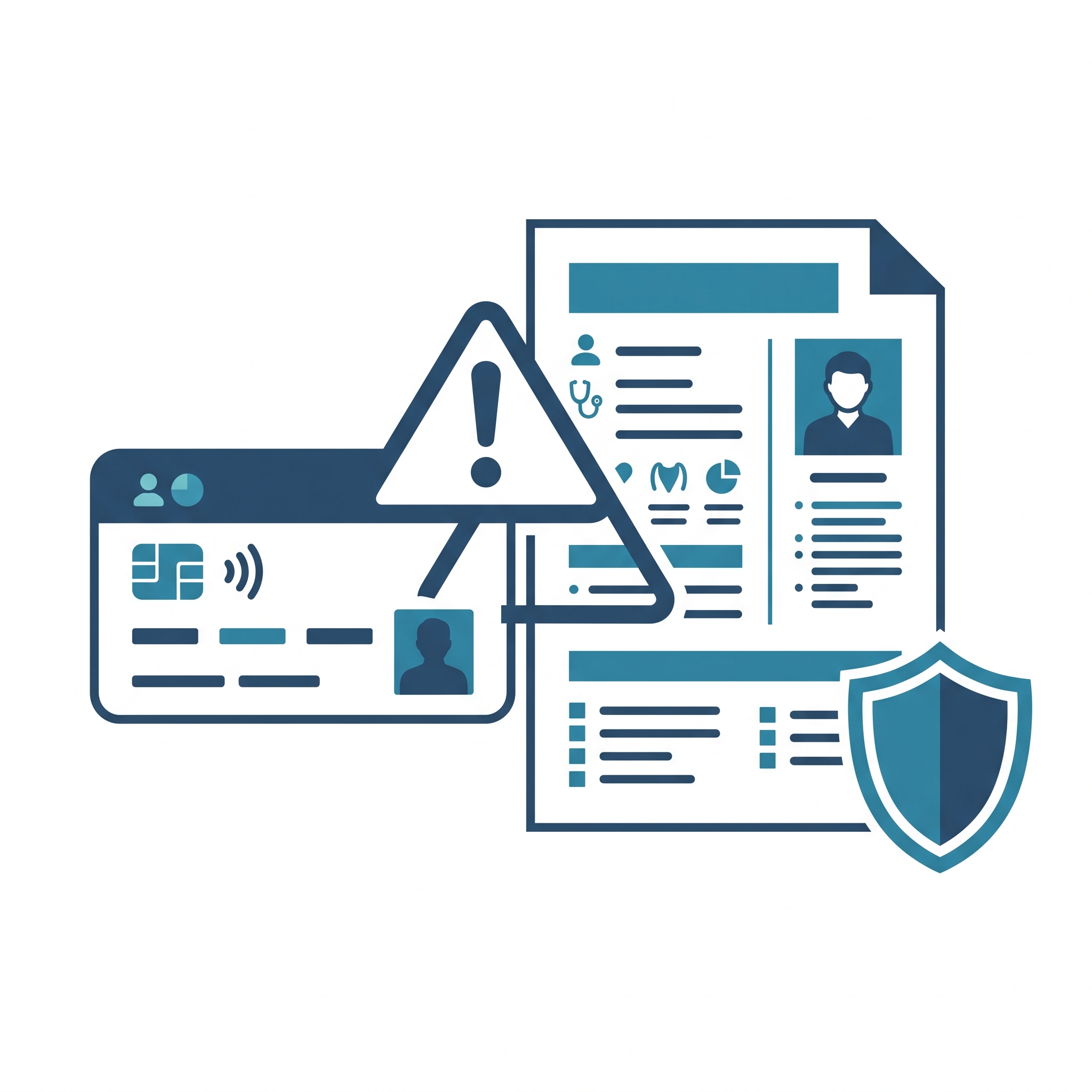
Medical identity theft is one of the least talked-about, yet most damaging, forms of identity fraud — especially for seniors with active Medicare coverage. Unlike credit card fraud, which mostly just costs money, medical identity theft can actually alter your medical records, creating risks that go beyond financial loss and straight into your own healthcare safety.
What Medical Identity Theft Actually Is
It happens when someone uses your personal information — usually your Medicare number, health insurance details, or Social Security number — to receive care, equipment, or prescriptions billed to your name, or to submit fraudulent claims to Medicare or your insurer without any real service ever taking place.
How It Typically Happens
Medicare number scams. Someone calls, shows up at your door, or approaches you at a health fair offering “free” genetic testing, back braces, or other equipment in exchange for your Medicare number. That number then gets used to bill Medicare for services you never actually get.
Data breaches at healthcare providers. Hospitals, clinics, insurance companies — frequent breach targets, exposing whatever medical and insurance info they had stored.
Stolen insurance cards. A lost or stolen physical card can let someone else receive care under your name and coverage.
Family or acquaintance misuse. Uncomfortable to think about, but this sometimes comes from someone the victim actually knows, who has access to their insurance card or personal information.
Why This Type of Theft Is Especially Damaging
It can corrupt your actual medical records. If someone else gets treated using your identity, their medical information — blood type, allergies, diagnoses, medications — can end up mixed into your file. In a future emergency, that could mean a provider making decisions based on wrong information about your own health.
It can affect your coverage. Fraudulent claims can count against your benefit limits, potentially getting in the way of legitimate care later, or triggering unwanted scrutiny of your account.
It’s often harder to catch than financial fraud. A bank flags unfamiliar charges fast; medical identity theft might only surface when you get a confusing bill, get denied on a legitimate claim, or spot something wrong on a record you happen to review.
Warning Signs
- Bills or Explanation of Benefits (EOB) statements for care, equipment, or prescriptions you never got
- A letter about hitting a benefit limit you don’t remember using
- Collection notices for medical debt that isn’t yours
- Getting denied coverage over a “pre-existing condition” or history you don’t recognize
- Medical records with diagnoses, treatments, or allergies that don’t match your actual history
What to Do If You Suspect It
Go through your Medicare Summary Notice or insurance EOB carefully — these list every service billed under your name, and checking them regularly is one of the most effective ways to catch this early.
Contact your insurer or Medicare right away to report unfamiliar charges and request a corrected billing record.
Request copies of medical records from any provider listed on a fraudulent claim, and formally dispute anything inaccurate.
Report it to the Senior Medicare Patrol (SMP), a free program built specifically to help Medicare beneficiaries identify and report fraud, errors, and abuse.
File a report at IdentityTheft.gov for a broader recovery plan.
Consider a credit freeze too, since medical identity theft sometimes overlaps with broader identity theft involving your Social Security number.
Protecting Yourself Going Forward
Never give your Medicare or insurance number to anyone who contacts you unsolicited, no matter what free service or equipment they’re dangling.
Treat your Medicare card the way you’d treat a credit card — keep it secure, and only share the number with trusted, verified healthcare providers.
Actually read your Medicare Summary Notices and insurance statements when they arrive, rather than setting them aside.
Shred old insurance documents and EOB statements before tossing them.
The Bottom Line
Medical identity theft is uniquely concerning because it can hit both your finances and the accuracy of your actual medical records. Regularly going through your Medicare Summary Notices and insurance statements, even when they seem routine, is one of the most effective ways to catch this kind of fraud before it does lasting damage.
Note: This article is for informational purposes only and does not constitute legal or financial advice. If you believe you have been the victim of medical identity theft, contact the Senior Medicare Patrol or visit IdentityTheft.gov.